
 Sign in
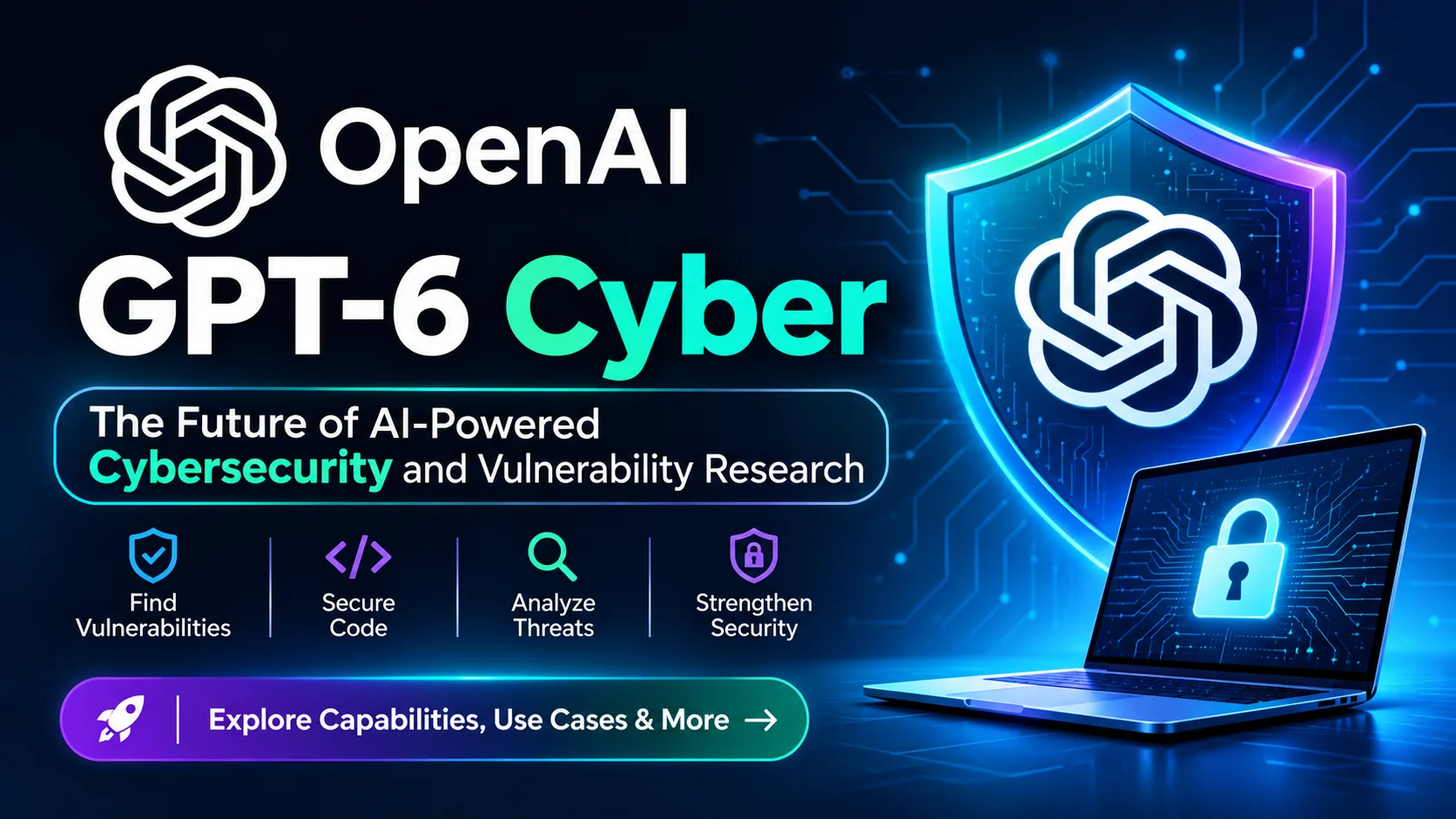
OpenAI GPT-6 Cyber: The Future of AI-Powered Cybersecurity and Vulnerability Research
Cybersecurity is becoming one of the most important challenges in modern technology.
As software systems become more complex, organizations face increasingly sophisticated security threats. Applications, cloud infrastructure, operating systems, databases, and enterprise networks all require continuous monitoring, testing, and protection.
Traditional security workflows often require specialized knowledge, significant time, and experienced security researchers. Identifying a vulnerability is only the beginning. Researchers must understand its root cause, determine its potential impact, reproduce the issue, and develop an effective solution.
Artificial intelligence is beginning to change this process.
OpenAI is advancing cybersecurity research with specialized AI models designed to help authorized security professionals investigate vulnerabilities and strengthen software security.
One of the most important developments is OpenAI GPT-6 Cyber, a cybersecurity-focused model designed to assist with advanced vulnerability research, security testing, and defensive engineering.
Unlike general-purpose AI assistants, GPT-6 Cyber is purpose-trained for specialized cybersecurity workflows. Its capabilities extend beyond explaining security concepts to helping researchers investigate real software vulnerabilities and validate potential security weaknesses.
In this article, we explore what OpenAI GPT-6 Cyber is, how it works, what makes it different from traditional AI models, and how developers, security researchers, and organizations can use this technology responsibly.
1. What Is OpenAI GPT-6 Cyber?
OpenAI GPT-6 Cyber is a specialized artificial intelligence model developed for cybersecurity research and authorized security operations.
Its primary purpose is to help security professionals understand software vulnerabilities, investigate potential security weaknesses, validate findings, and improve the security of software systems.
The model is part of OpenAI's broader efforts to make advanced AI capabilities available to trusted cybersecurity defenders.
Traditional GPT models are designed for a wide range of tasks, including writing, coding, research, and general problem-solving.
GPT-6 Cyber is different because it is specifically trained and evaluated for cybersecurity-related work.
Its intended applications include:
- Vulnerability discovery
- Software security analysis
- Security code review
- Vulnerability reproduction
- Exploit validation in authorized environments
- Security research
- Patch development and validation
- Defensive security investigations
The model is particularly relevant for organizations that maintain large software projects and need to identify security weaknesses before attackers can exploit them.
Importantly, GPT-6 Cyber is not simply an automated antivirus application or a replacement for traditional security tools. It is an AI capability that can support skilled security professionals throughout complex research and remediation workflows.
2. How Is GPT-6 Cyber Different From Regular GPT Models?
General-purpose GPT models can already help developers understand code, identify programming mistakes, and explain common security vulnerabilities.
However, advanced cybersecurity research requires specialized capabilities.
A researcher may need to investigate thousands of lines of source code, understand relationships between different components, reproduce a difficult software failure, and determine whether a potential vulnerability can be exploited under specific conditions.
This requires sustained technical reasoning and a detailed understanding of software behavior.
GPT-6 Cyber is designed to improve performance on these specialized tasks.
| CapabilityGeneral-purpose GPTGPT-6 Cyber | ||
| General writing | Yes | Not its primary purpose |
| Programming assistance | Yes | Yes |
| Code security review | Yes | Specialized focus |
| Vulnerability research | General capability | Specialized capability |
| Exploit validation | Restricted by safeguards | Designed for approved workflows |
| Security testing | General assistance | Specialized focus |
| Patch investigation | Yes | Specialized focus |
| Advanced cybersecurity research | Varies | Primary purpose |
The important distinction is specialization.
A general-purpose model can explain what a SQL injection vulnerability is. A cybersecurity-focused model is designed to help authorized researchers investigate whether a particular software system contains such a weakness and whether it can be reproduced and fixed.
3. Key Features and Capabilities of GPT-6 Cyber
3.1 Advanced Vulnerability Discovery
One of the most important applications of GPT-6 Cyber is identifying security vulnerabilities in software.
Modern applications contain complicated dependencies, interconnected services, authentication systems, and thousands of code paths.
Some vulnerabilities are easy to identify, while others require extensive investigation.
AI-powered security research can help identify issues such as:
- Memory corruption
- Authentication weaknesses
- Authorization problems
- Input validation vulnerabilities
- Unsafe memory operations
- Logic errors
- Insecure software dependencies
- Privilege escalation weaknesses
The model can assist researchers in understanding the underlying causes of these problems and producing evidence that supports further investigation.
3.2 Exploit Validation
Finding a suspicious code pattern does not necessarily mean that a system contains an exploitable vulnerability.
Security researchers must determine whether a weakness can actually produce a security impact.
Exploit validation helps distinguish theoretical problems from reproducible vulnerabilities.
GPT-6 Cyber is designed to support authorized exploit validation in controlled environments.
This is valuable because security teams need reliable evidence before prioritizing a vulnerability or recommending a fix.
3.3 Advanced Code Security Analysis
Developers frequently introduce security issues unintentionally.
Examples include:
- Improper input handling
- Insecure authentication logic
- Missing access controls
- Unsafe file operations
- Weak session management
- Incorrect permission checks
- Vulnerable dependency configurations
GPT-6 Cyber can support security reviews by helping researchers investigate complex codebases and understand potential weaknesses.
This can be particularly useful for large projects where manual security reviews are time-consuming.
3.4 Security Patch Development
Finding vulnerabilities is only one part of cybersecurity.
The next step is fixing them.
A useful security workflow should help developers understand:
- What caused the vulnerability?
- Which components are affected?
- What conditions trigger the issue?
- What changes can resolve it?
- Could the proposed fix introduce another problem?
- Does the fix address the original vulnerability?
AI can assist with these investigations and help developers prepare candidate patches.
However, security patches should always be reviewed, tested, and validated before deployment.
3.5 Complex Software Investigation
Some vulnerabilities cannot be understood by examining a single function or file.
They may involve interactions between multiple software components.
For example, a security weakness could originate in an input-processing component but only become exploitable through an interaction with another service.
GPT-6 Cyber is designed to support more advanced, sustained vulnerability investigations.
This is especially valuable for:
- Operating systems
- Web browsers
- Databases
- Enterprise applications
- Cloud infrastructure
- Open-source software
4. OpenAI Daybreak: Access to Advanced Cybersecurity Models
OpenAI's cybersecurity ecosystem also includes Daybreak, which provides access pathways for approved cybersecurity defenders.
Daybreak is important because highly capable cybersecurity models require additional safeguards and controlled access.
OpenAI describes two access pathways:
Daybreak Blue
Daybreak Blue provides access to general-purpose frontier models with safeguards tailored to authorized defensive cybersecurity work.
It is intended to support activities such as:
- Vulnerability discovery
- Secure code review
- Malware analysis
- Incident response
- Security investigations
- Patch validation
It is a useful starting point for organizations that need AI assistance across different defensive security tasks.
Daybreak Red
Daybreak Red provides access to purpose-trained cybersecurity models for more advanced authorized security research.
Its intended workflows include:
- Advanced vulnerability research
- Exploit validation
- Authorized security testing
- Complex software security investigations
GPT-6 Cyber is associated with this more specialized access pathway.
Access is not equivalent to unrestricted public API availability. Organizations must satisfy OpenAI's applicable approval and access requirements.
This distinction is important for developers planning to integrate these models into commercial security platforms.
5. Real-World Cybersecurity Applications
The value of specialized AI models becomes clearer when we examine practical security scenarios.
5.1 Securing Open-Source Software
Open-source projects are used by millions of developers and organizations.
However, maintaining the security of large repositories requires continuous investigation.
AI-assisted research can help security teams examine complex codebases, identify suspicious behavior, and investigate potential vulnerabilities.
This can support maintainers who have limited resources but are responsible for important software dependencies.
5.2 Enterprise Application Security
Enterprise applications often contain:
- Authentication services
- Payment integrations
- Customer databases
- Internal APIs
- Administrative dashboards
- Third-party integrations
Security researchers can use AI-assisted workflows to review these components and identify areas that require additional testing.
5.3 Cloud Infrastructure Security
Cloud environments contain multiple interconnected services, permissions, storage systems, and network configurations.
AI can help security teams investigate configuration risks, understand access-control problems, and prioritize defensive improvements.
5.4 Secure Software Development
Developers can incorporate AI-assisted security reviews into their development lifecycle.
For example, a development platform could analyze code changes before they are merged into the main branch.
Potential checks include:
- Insecure coding patterns
- Missing authorization checks
- Unsafe data handling
- Exposed secrets
- Vulnerable dependencies
- Potential injection vulnerabilities
AI findings should be treated as recommendations requiring verification, not automatically accepted as confirmed vulnerabilities.
5.5 Security Incident Investigation
When a security incident occurs, investigators need to understand what happened, which systems were affected, and what actions should be taken.
AI can help summarize technical evidence, organize investigation findings, explain suspicious events, and support incident documentation.
Human security professionals should retain control over incident decisions and response actions.
6. OpenAI GPT-6 Cyber's Real-World Research Impact
OpenAI has reported significant results from its cybersecurity research using GPT-6 Cyber.
These examples demonstrate why specialized AI cybersecurity models are receiving considerable attention.
Firefox Security Research
OpenAI reported that its researchers used GPT-6 Cyber to identify 81 previously unknown high-severity vulnerabilities in Firefox.
The research also included proposed patches and technical evidence that were shared with Mozilla.
This demonstrates how AI-assisted research can help security teams investigate mature software projects that have already undergone extensive testing.
Linux Kernel Vulnerability Research
OpenAI also reported using GPT-6 Cyber to reproduce 1,724 vulnerabilities and develop working exploits for 948 of them during its research campaign.
These results highlight the model's potential in advanced vulnerability investigation.
Such capabilities also demonstrate why access controls and responsible disclosure are essential.
Improvements in Security Benchmarks
OpenAI reported that GPT-6 Cyber achieved 48.5% on its ExploitGym evaluation, compared with 32.1% for GPT-5.6 Cyber.
The company also reported improved performance in vulnerability discovery and better adherence to authorized testing boundaries.
These figures are specific to OpenAI's reported evaluation settings. They should not be interpreted as universal real-world success rates.
7. Security, Safety, and Responsible AI Usage
Advanced cybersecurity AI introduces both opportunities and risks.
The same capabilities that help researchers discover vulnerabilities could potentially be misused against systems without permission.
For this reason, responsible deployment is essential.
Organizations should follow several principles.
Authorized testing only
Security testing should be performed only on systems owned by the organization or covered by explicit authorization.
Controlled environments
Vulnerability reproduction and security experiments should take place in isolated environments wherever practical.
Human oversight
Security researchers should review important findings, approve sensitive actions, and validate proposed fixes.
Responsible disclosure
Previously unknown vulnerabilities should be reported through appropriate coordinated disclosure channels.
Access management
Only authorized users should have access to advanced security capabilities.
Auditability
Organizations should maintain records of security investigations, approvals, and important actions.
AI should strengthen cybersecurity teams, not remove accountability from security operations.
8. How Developers Can Use OpenAI Cyber Models in Their Platforms
Developers building cybersecurity products can potentially integrate specialized AI capabilities into their workflows.
However, GPT-6 Cyber access should not be assumed to work like an ordinary public OpenAI API model.
Before building an integration, developers should confirm their organization's eligibility, approved access tier, supported model identifiers, API documentation, and applicable usage policies.
Here are some practical product ideas.
8.1 AI-Powered Code Security Scanner
A platform could allow developers to submit authorized source code for security analysis.
The workflow could be:
- User submits a repository or selected code.
- Platform identifies the relevant files.
- AI reviews potential security weaknesses.
- Findings are categorized by severity.
- Developers review the evidence.
- Verified issues are added to a security report.
8.2 Automated Vulnerability Reporting
Security researchers spend considerable time preparing reports.
An AI assistant could help generate structured reports containing:
- Vulnerability title
- Affected component
- Severity assessment
- Technical description
- Evidence
- Potential impact
- Recommended remediation
- Verification status
Every report should distinguish confirmed vulnerabilities from suspected issues.
8.3 AI-Assisted Secure Code Review
Development platforms could integrate AI into pull-request workflows.
Whenever a developer submits code changes, the platform could:
- Review security-sensitive changes
- Identify potential authorization issues
- Highlight unsafe input handling
- Suggest secure alternatives
- Generate review summaries
This can make security review a regular part of software development.
8.4 Security Knowledge Assistant
A cybersecurity knowledge assistant could help developers understand:
- Common vulnerabilities
- Secure coding practices
- Security standards
- Authentication concepts
- Encryption principles
- Software hardening
- Vulnerability remediation
General-purpose GPT models may be sufficient for many educational and explanatory tasks, while specialized cyber models can be reserved for approved advanced research.
8.5 Centralized AI Model Management
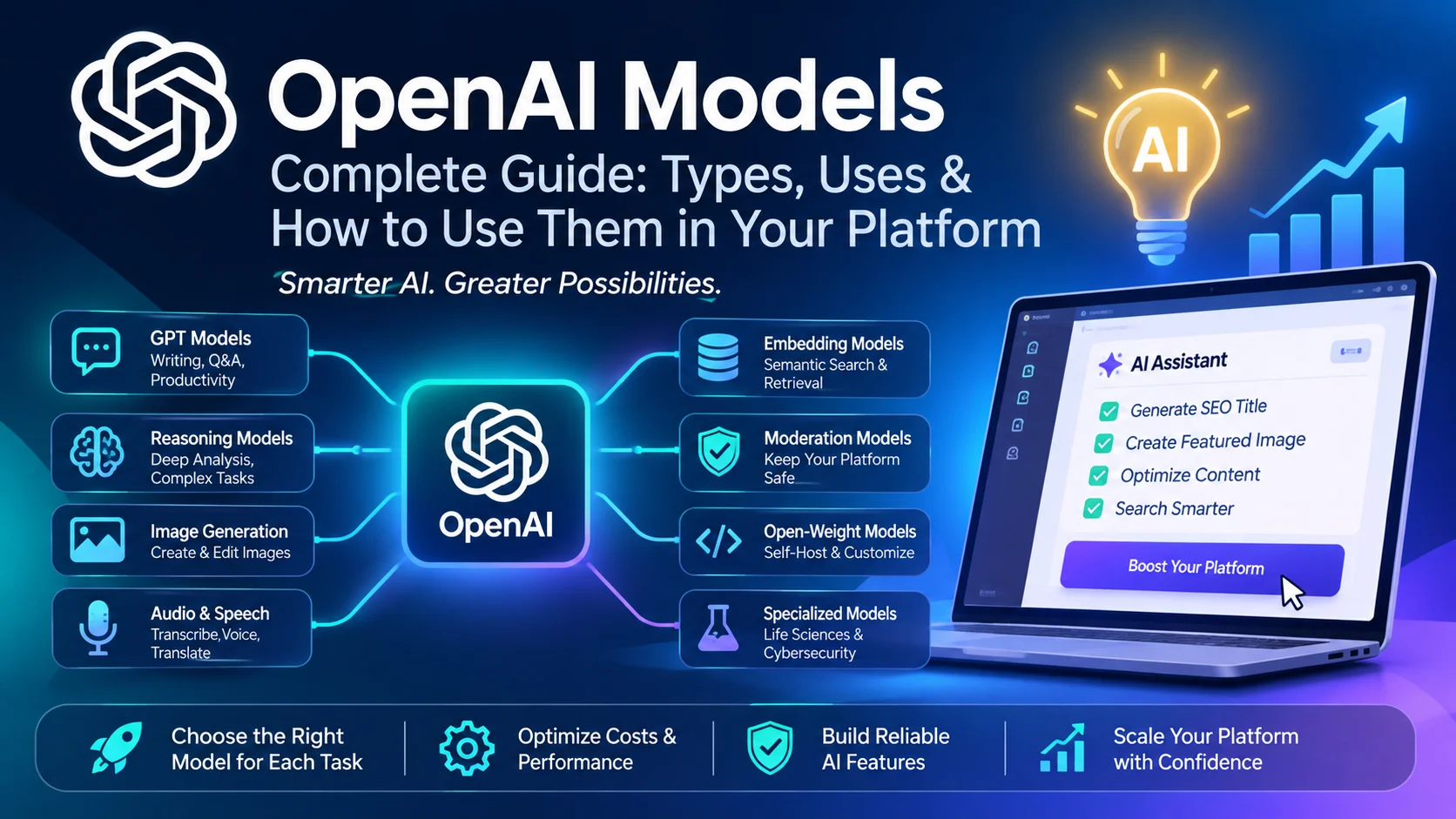
A production cybersecurity platform should not hardcode a particular AI model into every feature.
Instead, build a centralized AI management system that controls:
- AI provider
- Model selection
- API credentials
- Feature permissions
- Prompt templates
- Usage limits
- Request logging
- Response validation
- Cost monitoring
This allows the platform to use different models for different jobs.
For example:
| Platform featureSuitable AI capability | |
| Security explanations | General-purpose GPT |
| Code review | Coding-capable GPT model |
| Vulnerability research | Approved specialized cyber model |
| Security report writing | General-purpose GPT |
| Log summarization | Efficient GPT model |
| Security knowledge search | Embeddings + GPT |
| Content moderation | Moderation model |
This architecture provides flexibility without making the entire application dependent on one AI provider.
9. GPT-6 Cyber vs Traditional Cybersecurity Tools
AI models do not replace established cybersecurity infrastructure.
Traditional tools remain important because they provide specialized detection, testing, monitoring, and enforcement capabilities.
| TechnologyPrimary responsibility | |
| Antivirus | Malware detection and prevention |
| Firewall | Network traffic control |
| SIEM | Security event collection and analysis |
| EDR | Endpoint monitoring and response |
| Vulnerability scanner | Identifying known security weaknesses |
| Static analysis | Examining source code |
| Penetration testing tools | Authorized security testing |
| GPT-6 Cyber | AI-assisted advanced security research |
The strongest approach is to combine AI with established security tools.
For example, a vulnerability scanner may identify a suspicious dependency, while an AI assistant helps researchers understand the underlying issue, investigate its impact, and prepare a remediation recommendation.
AI adds reasoning and workflow assistance to the existing security ecosystem.
10. Limitations and Challenges
Despite its capabilities, GPT-6 Cyber should not be considered a complete cybersecurity solution.
There are several important limitations.
Access restrictions: Advanced cybersecurity capabilities are subject to approval and access requirements.
Incorrect findings: AI can generate inaccurate conclusions or incorrectly assess the severity of an issue.
Infrastructure requirements: Advanced security workflows may require isolated testing environments, monitoring, and additional tools.
Operational costs: Long-running investigations and large codebases can consume significant computing resources.
Human expertise: Security professionals are still needed to validate findings, prioritize risks, and approve remediation.
Changing capabilities: Model names, access programs, pricing, and supported API functionality can change over time.
Organizations should evaluate the model against their own security requirements before making it part of a production workflow.
11. The Future of AI-Powered Cybersecurity
The relationship between artificial intelligence and cybersecurity will continue to evolve.
Security teams will increasingly use AI to accelerate research, review software, analyze incidents, and improve remediation workflows.
Some important developments to watch include:
- AI-assisted vulnerability discovery
- Automated secure code review
- Intelligent security operations
- AI-powered threat investigation
- Continuous software security assessment
- Automated remediation recommendations
- More advanced defensive security agents
The most significant change may be the transition from AI systems that simply explain security problems to systems that can help investigate, validate, and resolve them within controlled and authorized environments.
However, this progress must be accompanied by stronger safeguards, accountability, and responsible deployment.
Conclusion
OpenAI GPT-6 Cyber represents an important development in specialized artificial intelligence for cybersecurity.
Its focus on vulnerability research, exploit validation, complex software investigation, and security remediation demonstrates how AI can support professional security teams.
For developers and businesses, the opportunity extends beyond using AI as a chatbot. Specialized models can become part of software development, security reviews, vulnerability management, and incident investigation workflows.
However, successful implementation requires more than connecting an API. Organizations must establish appropriate access controls, testing environments, human oversight, and reliable validation processes.
The future of cybersecurity will not be defined by AI replacing security professionals. It will be shaped by how effectively people and advanced AI systems work together to identify weaknesses, fix vulnerabilities, and build more secure digital infrastructure.
AI can accelerate cybersecurity research, but responsible security practices must remain at the center of every deployment.
Frequently Asked Questions (FAQs)
1. What is OpenAI GPT-6 Cyber?
OpenAI GPT-6 Cyber is a specialized cybersecurity AI model designed to support authorized vulnerability research, security testing, exploit validation, and defensive software security work.
2. Is GPT-6 Cyber different from regular ChatGPT?
Yes. GPT-6 Cyber is purpose-trained for specialized cybersecurity workflows, whereas general-purpose GPT models support a much broader range of tasks.
3. Can GPT-6 Cyber find software vulnerabilities?
It is designed to help authorized researchers discover, investigate, and validate software vulnerabilities, including complex weaknesses in large codebases.
4. Is OpenAI GPT-6 Cyber publicly available?
It is not a universally available model for unrestricted API access. OpenAI provides access through its specialized Daybreak program for approved customers.
5. What is OpenAI Daybreak?
Daybreak is OpenAI's cybersecurity initiative that provides approved defenders with access to advanced AI capabilities through different access pathways, including Daybreak Blue and Daybreak Red.
6. Can developers integrate GPT-6 Cyber into their applications?
Integration depends on eligibility and approved access. Developers should consult OpenAI's official documentation and confirm the supported API configuration before implementation.
7. Can GPT-6 Cyber replace penetration testers?
No. It can assist security researchers and accelerate certain workflows, but professional expertise, authorization, independent validation, and human oversight remain essential.
8. Is GPT-6 Cyber useful for secure software development?
Yes. Its cybersecurity research capabilities can support vulnerability investigation, code security reviews, and patch validation.
9. What is the difference between Daybreak Blue and Daybreak Red?
Daybreak Blue provides frontier general-purpose models with safeguards tailored to defensive security work. Daybreak Red provides access to specialized cybersecurity models for approved advanced research and testing.
10. Why are cybersecurity-specific AI models important?
They can help security professionals investigate complex software weaknesses, improve research efficiency, validate findings, and strengthen defensive capabilities.
Official OpenAI Resources
- OpenAI GPT-6 Cyber announcement: https://openai.com/index/introducing-gpt-6-cyber/
- OpenAI Models Directory: https://developers.openai.com/api/docs/models
- GPT-5.6 Cyber API documentation: https://developers.openai.com/api/docs/models/gpt-5.6-cyber
- OpenAI Daybreak announcement: https://openai.com/index/expanding-daybreak-as-the-cyber-defense-window-narrows/
- Trusted Access for Cyber: https://openai.com/index/trusted-access-for-cyber/
Editorial note: Model access, capabilities, and availability are subject to change. Check official OpenAI documentation before implementing an integration.
Sign in to join the discussion (you can keep reading without an account)
Related Blogs






Recommended for you

0 Comments