
 Sign in
Chinese Beauty and Care: The Art of Tradition, Elegance, and Self-Care
Chinese Beauty and Care: The Art of Tradition, Elegance, and Self-Care
Introduction: A Beauty Beyond Appearance
Chinese beauty culture is a fascinating combination of ancient traditions, natural ingredients, modern skincare, and personal care. For thousands of years, beauty in China has been connected not only with physical appearance but also with health, balance, cleanliness, and inner well-being.
From traditional herbal remedies to modern skincare innovations, Chinese beauty practices have evolved through generations. Their approach often reflects a simple philosophy: beauty is not just about how you look; it is also about how you care for yourself.
Let's explore the beautiful world of Chinese beauty and self-care.
1. The History of Chinese Beauty
Chinese beauty traditions have a history stretching back thousands of years. In ancient China, skincare and personal grooming were influenced by nature, traditional medicine, culture, and social customs.
People used ingredients such as green tea, rice water, herbal extracts, and natural oils in different personal-care preparations.
Traditional beauty practices also included:
- Herbal skincare preparations.
- Rice-based cleansing traditions.
- Gentle facial massage.
- Hair oils and herbal hair treatments.
- Bathing and personal hygiene rituals.
These traditions have influenced some modern beauty products and routines.
2. Chinese Skincare Secrets
One of the most interesting aspects of Chinese beauty culture is its connection with natural ingredients.
Here are some ingredients commonly associated with Chinese skincare:
Green Tea: Green tea contains antioxidants and is widely used in skincare products. It can help support the skin's natural protective barrier.
Rice Water: Rice water has a long history in East Asian beauty traditions. It is used in some homemade beauty routines and modern haircare products.
Goji Berries: These berries are valued in traditional Chinese food culture and contain various nutrients. They are also used in some beauty products.
Ginseng: Ginseng is a well-known traditional Chinese herbal ingredient. It appears in skincare products designed to support healthy-looking skin.
Lotus: Lotus extracts are used in some skincare formulations, particularly in products marketed for hydration and soothing.
Natural ingredients can be interesting, but natural does not automatically mean safe for everyone. Always choose suitable products and test new skincare products carefully.
3. The Chinese Skincare Routine
A good skincare routine does not have to be complicated. Consistency is more important than using dozens of products.
A simple routine includes:
Morning:
- Gently cleanse your face.
- Apply a moisturiser suitable for your skin.
- Use sunscreen with SPF 30 or higher.
Night:
- Clean your face to remove dirt and sunscreen.
- Apply a gentle moisturiser.
- Give your skin time to rest.
The purpose of skincare is to maintain healthy, comfortable skin, not to change your natural skin colour or appearance.
4. Traditional Chinese Haircare
Haircare is another interesting part of Chinese beauty culture.
Traditional haircare practices have included herbal ingredients, gentle washing, scalp massage, and rice-water preparations.
Some commonly discussed ingredients include:
- Ginger: Used in some traditional haircare preparations.
- Black sesame: A traditional food valued for its nutritional content.
- Green tea: Used in some modern haircare products.
- Rice water: Popular in various East Asian haircare traditions.
Healthy hair benefits from gentle handling, suitable shampoo, conditioning, and a balanced diet.
5. Traditional Chinese Beauty and Makeup
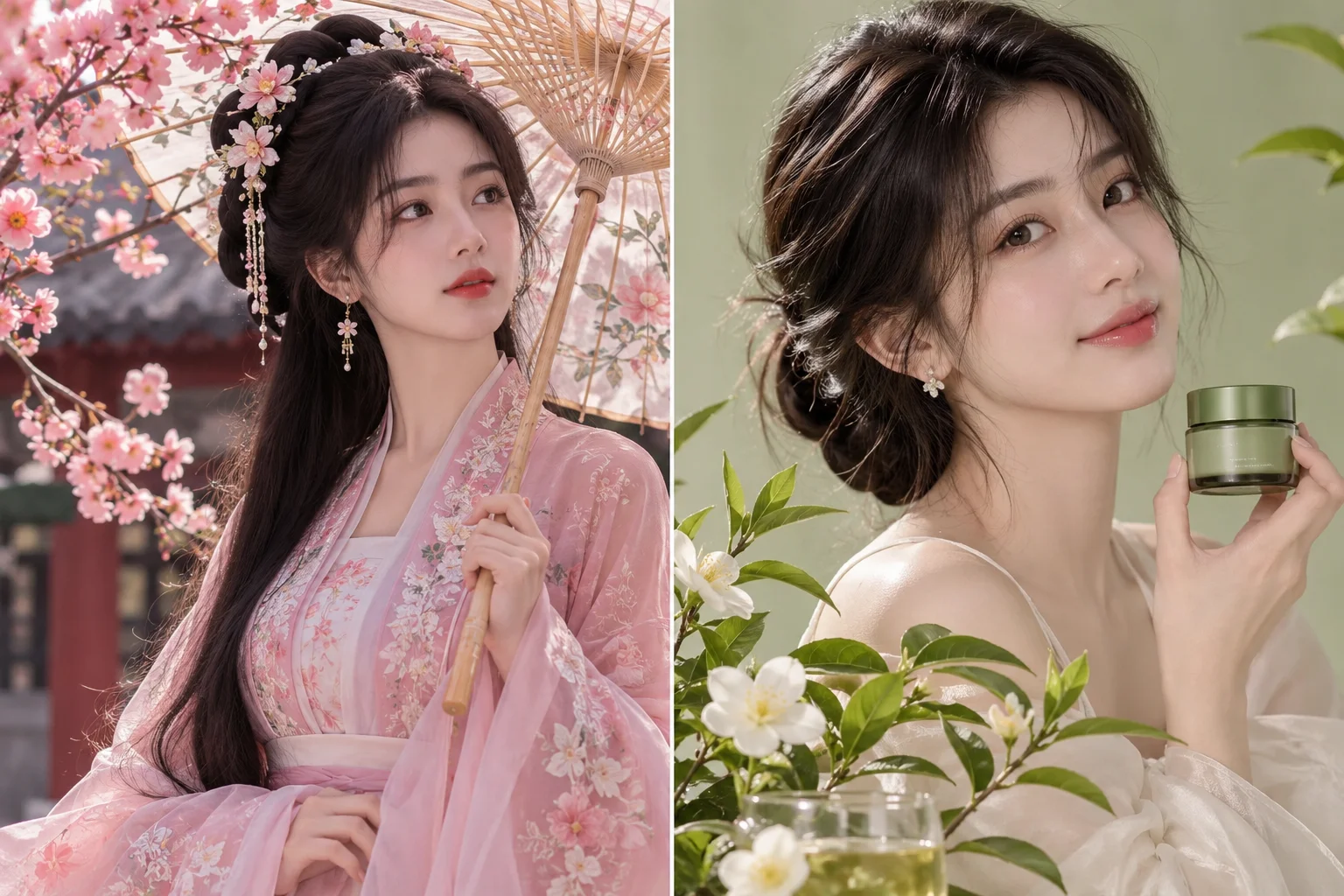
Traditional Chinese makeup has a rich artistic history.
In different historical periods, makeup styles reflected fashion, social status, artistic expression, and cultural preferences.
Some traditional elements included:
- Delicately decorated eyebrows.
- Softly coloured lips.
- Decorative hair ornaments.
- Intricate hairstyles.
- Floral-inspired accessories.
Traditional Chinese makeup was not limited to one appearance. Different dynasties developed their own styles.
Today, traditional Chinese aesthetics also influence modern makeup, fashion photography, and historical television dramas.
6. Chinese Beauty in the Modern World
Modern Chinese beauty culture combines traditional influences with scientific skincare and cosmetic innovation.
China has a growing beauty industry, including skincare, cosmetics, haircare, and personal-care products.
Some popular trends include:
C-Beauty: Chinese beauty brands are developing innovative products inspired by Chinese culture, art, and contemporary fashion.
Glass Skin: A skincare trend focused on a smooth, hydrated, healthy-looking complexion.
Minimal Makeup: Soft colours, natural-looking finishes, and subtle makeup techniques.
Herbal Skincare: Modern formulations sometimes incorporate traditional ingredients such as ginseng and green tea.
Sun Protection: Sunscreen and sun-protective habits are important parts of many modern skincare routines.
7. The Role of Diet and Lifestyle
Beauty care is not limited to products applied to the skin.
Traditional Chinese wellness culture often emphasises balance, nutrition, and lifestyle.
Some important habits include:
- Eating a variety of nutritious foods.
- Drinking enough water.
- Getting sufficient sleep.
- Maintaining personal hygiene.
- Managing everyday stress.
- Staying physically active.
These habits support general health and can also contribute to healthy-looking skin and hair.
8. Chinese Beauty Philosophy: Inner Beauty Matters
Perhaps the most meaningful aspect of beauty is that it cannot be measured by facial features, skin colour, or fashionable appearances.
Chinese cultural traditions have included philosophical ideas about harmony, balance, and self-cultivation.
These ideas can inspire a broader understanding of beauty: taking care of your body, developing confidence, expressing yourself, and treating yourself with kindness.
True elegance does not require looking like someone else.
9. Interesting Facts About Chinese Beauty Culture
- Rice has been used in various East Asian traditional beauty practices.
- Green tea is a popular ingredient in modern skincare products.
- Traditional Chinese hairstyles and hair ornaments have inspired contemporary fashion.
- Ginseng is one of the best-known traditional Chinese herbal ingredients.
- Chinese beauty brands are increasingly combining cultural designs with modern cosmetic technology.
- Traditional Chinese makeup varied significantly across historical dynasties.
- Chinese beauty culture includes both traditional practices and modern scientific approaches.
Conclusion: Beauty Is an Art of Care
Chinese beauty culture is more than skincare products, makeup trends, or traditional remedies. It represents a fascinating connection between history, nature, culture, and modern innovation.
From ancient herbal preparations to contemporary skincare science, its beauty traditions remind us that caring for ourselves is a meaningful practice.
Perhaps the most beautiful lesson is this: beauty does not need to be borrowed from another person or culture. It can be discovered through self-care, confidence, individuality, and the way we appreciate ourselves.
Because beauty is not simply something you see in the mirror; it is also reflected in the way you care for yourself.
Sign in to join the discussion (you can keep reading without an account)
Related Blogs



Recommended for you




0 Comments